AkzoNobel: Brazilian Voices in a Global Color Story
How Olive Tree Films produced two customer testimonial videos in Rio de Janeiro and Pelotas for AkzoNobel’s international Colorvation campaign, with the whole team traveling from São Paulo.
Customer testimonial videos
A color reading is a number. A customer explaining what it changed is a story.
Rio de Janeiro and Pelotas. Two customers. One team from São Paulo.
AkzoNobel and Colorvation
AkzoNobel describes itself on its About us page as an expert in paints and coatings for more than two centuries, active in more than 150 countries. Its Colorvation campaign presented the brand’s digital color tools for vehicle refinishing through the experience of the people who use them.
Before the shoot: a technology that starts with a color reading
In vehicle refinishing, color is the hardest part of the job. A repaired panel has to match the rest of the car, and the number of colors to match keeps growing. In Brazil alone, AkzoNobel cited demand for more than 30,000 new formulas a year, according to Mecânica Online. Getting a mixture right the first time saves paint, time and rework.
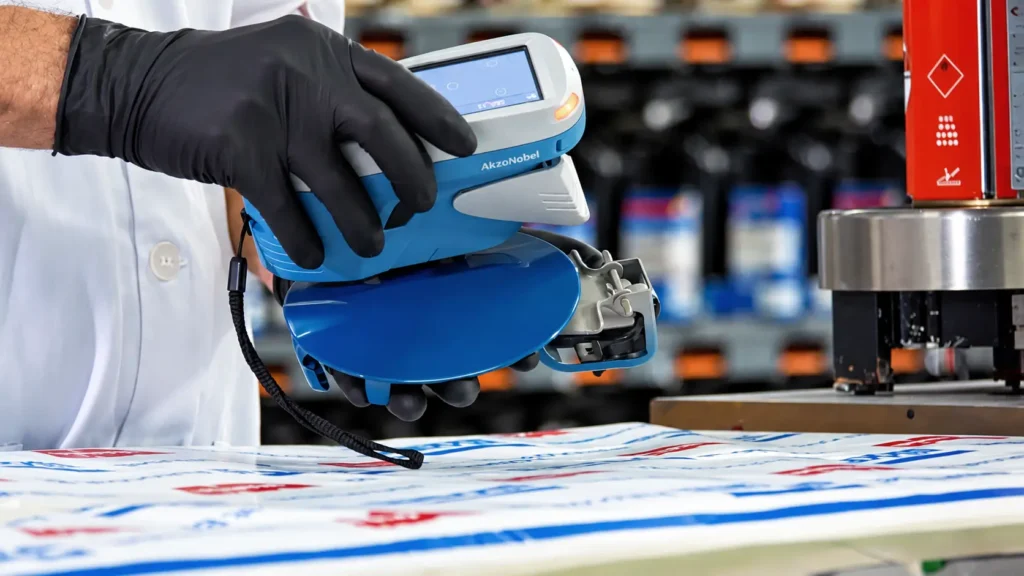
Colorvation is AkzoNobel’s digital approach to that problem. FenderBender reported its presentation at the SEMA Show as a way for bodyshops to match color faster and more accurately, with less paint waste. It brings together Automatchic Vision, a hand-held spectrophotometer that takes precise color readings from the vehicle, as described on the Sikkens product page and on Colorvation’s Automatchic page, and MIXIT, a cloud tool for formula retrieval with more than two million colors and variants. The device was developed jointly by AkzoNobel and BYK-Gardner, part of the ALTANA group: according to ALTANA, BYK-Gardner designed the concept and the measurement optics, AkzoNobel developed the operating concept, the menus and the touchscreen, and the result was the very first WiFi-capable multiangle spectrophotometer. AkzoNobel later combined the two tools into one system, Automatchic in MIXIT.
For the campaign, AkzoNobel wanted customers to tell the story. According to our project account, the brand selected five countries where the product had found success and showed the experience of customers in each. Brazil was one of them, and Olive Tree Films was chosen to produce the Brazilian customer testimonial videos.

The challenge: from specification to working day
A spectrophotometer can be described in specifications: optics, measuring angles, connectivity, the size of the database. Customers describe something else: how long it takes to prepare a paint, how often a color has to be redone, how much they trust the result. The Brazilian films had to bring that second view into an international campaign, next to the stories from the other selected countries. The challenge had three layers. Real customers: two businesses, not actors, explaining their own process in their own words. Two states: Rio de Janeiro, in the southeast, and Pelotas, in the far south of Rio Grande do Sul, more than a thousand kilometers apart, both reached by a team based in São Paulo. An international campaign: the films would sit inside AkzoNobel’s Colorvation presentation, so they had to make sense to viewers who would never visit either business.
There was no crisis behind the project, no failed campaign and no internal team that had fallen short. The need was the Brazilian contribution to an international initiative, produced to a standard that could stand next to the other countries. When one brand story is told in several markets, we follow our multi-market production model: a shared standard, with each local story kept specific to its place.
Real customers
Two states
One team from São Paulo
International campaign
The insight: let the customer give the technology a context
A product promise becomes easier to believe when a person explains how it fits a real working process. A reading on a screen means little to a bodyshop owner on another continent. A paint business owner saying what changed in the preparation of a color means a lot. So our approach was to keep each film close to its business and to the person speaking, instead of turning the customers into presenters of a product demonstration.
The second decision was about honesty. In a testimonial, every claim has an owner. Product figures belong to the brand that measured them. The experience belongs to the customer who lived it. The production belongs to us. Keeping those three apart, in the films and in this case, is what makes a testimonial credible to a skeptical professional audience. It is the same principle behind all our client testimonial videos.
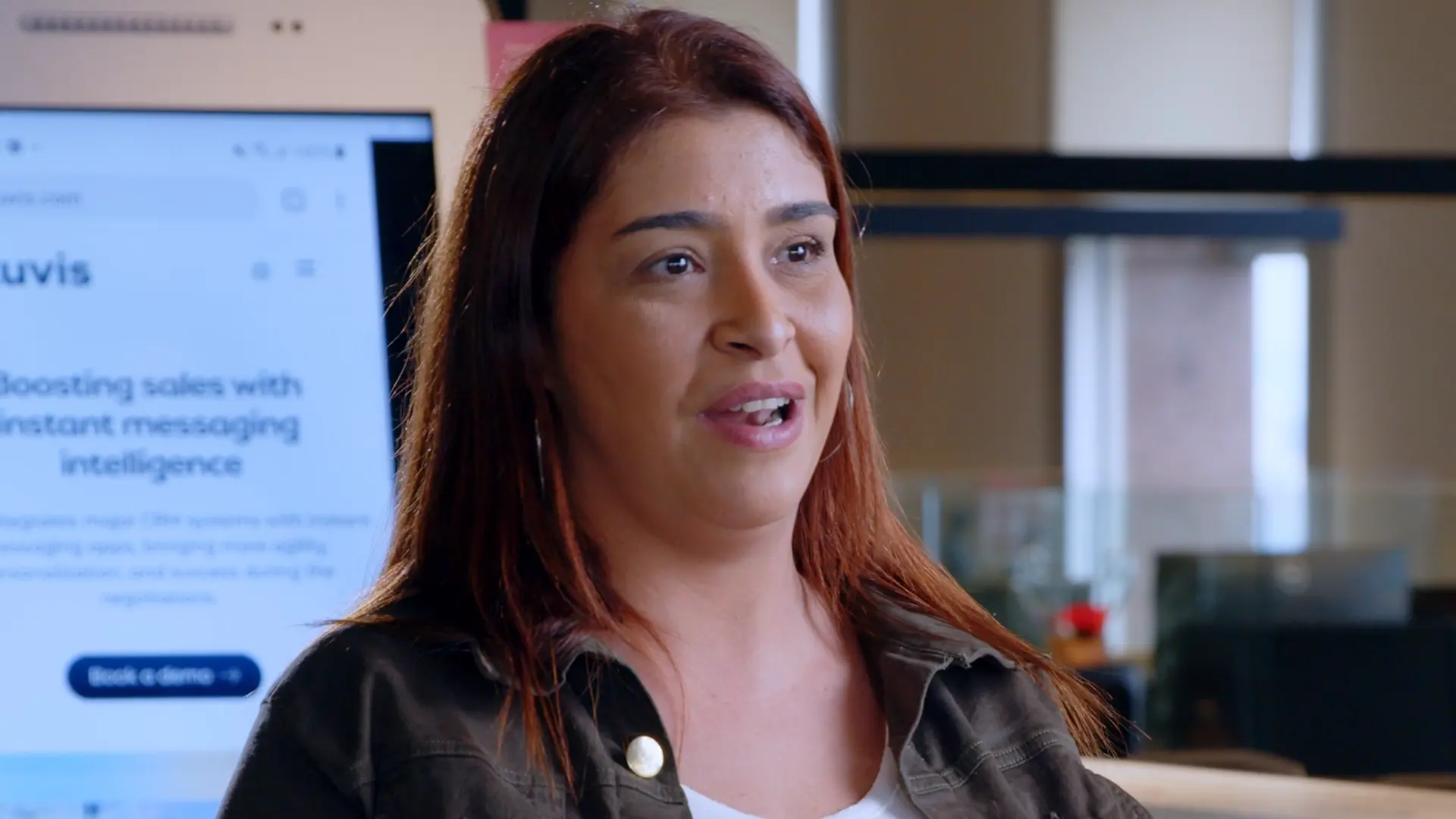
Two customer testimonial films for AkzoNobel’s Colorvation campaign: Jacob Martins at VivaCor Tintas, in Rio de Janeiro, and Rafael Braatz Blank at Schulz Comércio de Tintas, in Pelotas. AkzoNobel Vehicle Refinishes lists the Schulz testimonial on Vimeo in a Portuguese version and an English version.
The trailer is public. The full films are available on request.
The scope: two films, planning to finalization
What the project covered, and who was responsible for each part.
01.
Objective and audience
Bring the experience of Brazilian customers with Automatchic Vision into AkzoNobel’s international Colorvation campaign, for the automotive refinish professionals who visited the campaign online.
02.
What we produced
Two customer testimonial videos: one in Rio de Janeiro with Jacob Martins, owner of VivaCor Tintas, and one in Pelotas with Rafael Braatz Blank, Márcio Schulz’s business partner at Schulz Comércio de Tintas.
03.
Our responsibilities
Planning, pre-production, transport and travel logistics, filming, editing and finalization of both films.
04.
Team and travel
The whole Olive Tree Films team traveled from São Paulo to both locations.
05.
Durations, versions and timeline
Lorem ipsum dolor sit amet, consectetur adipiscing elit. Sed do eiusmod tempor incididunt ut labore et dolore magna aliqua.
06.
Channel
The Colorvation website, where both films were featured near the top of the homepage for several years, according to our project records.
Two cities, one workflow
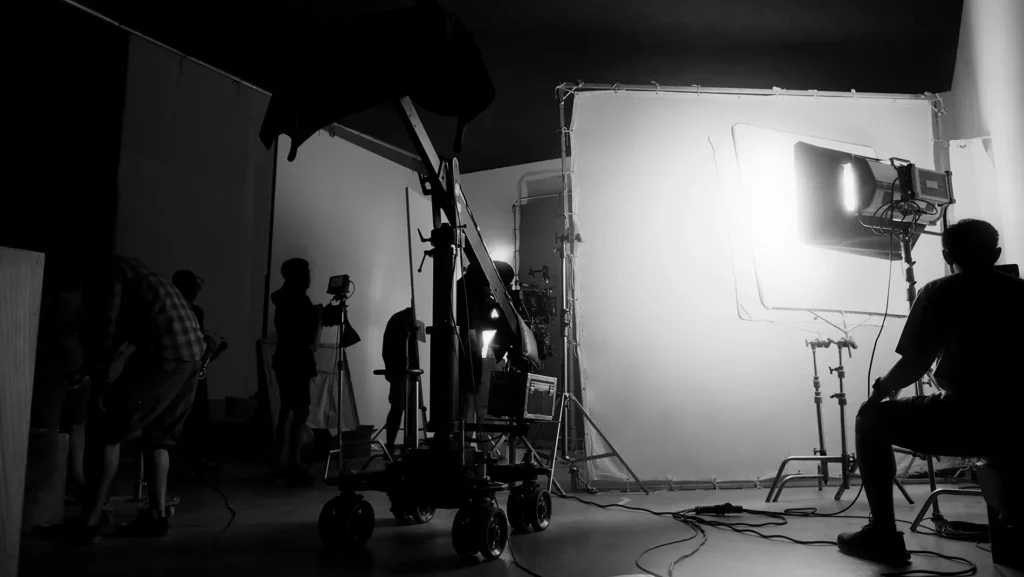
Two shoots in two states only work when they are planned as one project. Our team organized both films together: planning, pre-production with each business, the team’s travel from São Paulo, filming on location, editing and finalization. Every stage stayed with Olive Tree Films, so the two films shared one production standard even though they were recorded more than a thousand kilometers apart.
In each city, we filmed where the customers work, in their own businesses, because a testimonial about a working process is more convincing in the place where that process happens. The edit then gave each account a clear form for an international audience, keeping the customer’s own words at the center and the technology in its context. The result was two films with two different voices and one consistent finish, ready to sit side by side in the same campaign.

Planning both films

Pre-production with each business

Travel from São Paulo

Filming in Rio de Janeiro

Filming in Pelotas

Edit and finalization

Planning both films

Pre-production with each business

Travel from São Paulo

Filming in Rio de Janeiro

Filming in Pelotas

Edit and finalization
Who did what
The process: one campaign, three roles
Five stages, with the roles of AkzoNobel, the customers and Olive Tree Films separated at each step.
Two cities.
One team.
Featured on the
Colorvation homepage
-
Campaign
AkzoNobel created Colorvation and chose five countries where the product had succeeded.
-
Customers
VivaCor Tintas and Schulz opened their businesses and told their own experience.
-
Planning and travel
Olive Tree Films planned both shoots and moved the whole team from São Paulo.
-
Filming and edit
Our team filmed on location, then edited and finalized both films.
-
Publication
AkzoNobel featured the films near the top of the Colorvation homepage.
“The product has a specification sheet.
The customer has a story.”
A testimonial works when the technology stays in the background and the person stays in front. In both films, the customers explain the process in their own words, in their own businesses, and the brand gains a proof that no specification can give.
The experience: the right person on camera
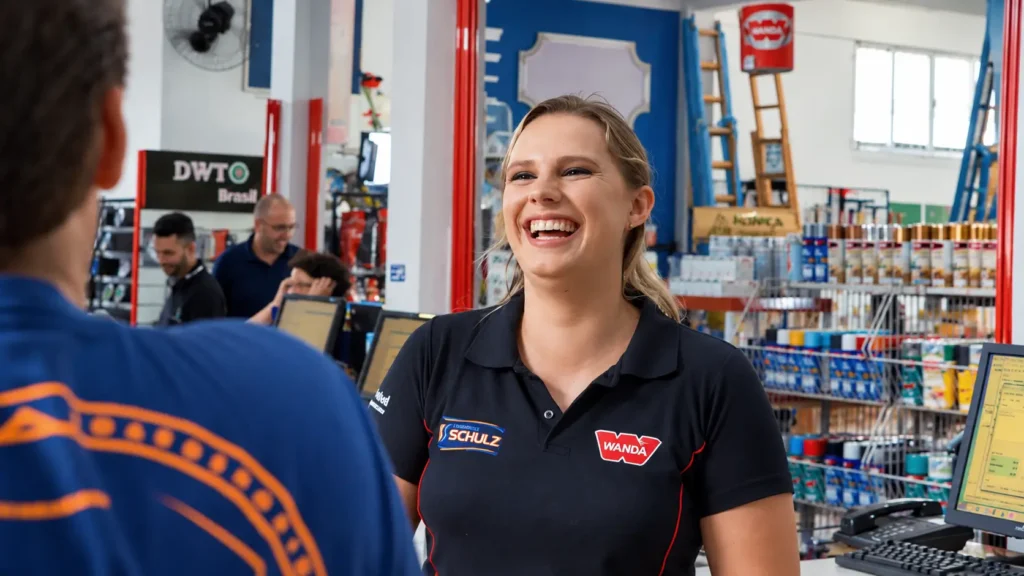
One detail of this project shows how a testimonial should be handled. The Pelotas film was recorded at Schulz Comércio de Tintas, a paint reseller in Rio Grande do Sul that Mecânica Online described as an AkzoNobel customer of 18 years. The business is associated with Márcio Schulz, but the person on camera is Rafael Braatz Blank, his business partner, whom the trade press describes as the company’s automotive colorist. Rafael is the only person in the film, and the Colorvation website attributes the testimonial to him by name. In it, he describes a year of work with Automatchic Vision and says that “currently the time spent to produce the paint is around 15 to 20 minutes.”
Getting the speaker right is not a formality. It lets the customer own their words, lets the brand publish them with confidence and lets anyone who reads the case check them. The same care applied in Rio de Janeiro, where Jacob Martins, the owner of VivaCor Tintas, spoke for his own business. For AkzoNobel, the proof of trust came later: the films stayed in a prominent place on the campaign website for years.
“The AMV added a lot to the company. Today we can produce colors about four times faster.”
Rafael Braatz Blank, Schulz Comércio de Tintas
Quoted in Mecânica Online, translated from Portuguese. A product result reported by the customer, not a result of the film.
The results
Brazilian customers
on a global homepage.
2
customer testimonial films, recorded in two Brazilian states by one team from São Paulo, from planning to finalization.
1 of 5
countries chosen by AkzoNobel to show customer experience in the Colorvation campaign, according to our project account.
Sources: our project records and the Colorvation website.
According to our project records, both Brazilian films were featured near the top of the Colorvation homepage for several years, which made them part of how AkzoNobel presented customer experience to everyone who visited the campaign online. The homepage has since changed, and the films no longer hold that position. We do not have view, lead or sales data for the films and do not claim any. The customer figures on this page, such as preparation time or faster color production, describe the product as its users reported it. Our result is the production: two finished films that an international brand kept in a prominent place for years.
Beyond the film
Whose numbers are these?
AkzoNobel’s own survey with paint resellers in Brazil and Chile, all of them using ColorPro and Automatchic Vision for at least a year, reported an average 20% reduction in total paint use, a 45% average increase in the speed of precise color search and up to 85% more colors produced per month, according to Mecânica Online. These are product results published by the manufacturer, and they vary with each business. They also show why the campaign wanted customers on camera: the people who live those numbers can explain them better than any chart. For brands planning customer testimonial videos, this project shows three things.
Lesson 1
Customers explain technology
A spectrophotometer has specifications. A paint business has a working day. The film is strongest when the customer connects the two in their own words.
Lesson 2
Keep every claim with its owner
Product figures belong to the brand, experience to the customer and production results to the production company. Separating them is what makes a testimonial believable.
Lesson 3
Distance is a production task
Two cities more than a thousand kilometers apart become one project when one team plans, travels, films and finishes everything. See our work in chemicals and manufacturing.
Related work and formats
Where this case connects to the rest of what we do.
Questions about this case
Short answers for brands planning customer testimonial videos in Brazil.
What is a customer testimonial video?
A short film in which a real customer explains, in their own words, how a product or service fits their work. In this case, two Brazilian paint businesses described their experience with Automatchic Vision for AkzoNobel’s Colorvation campaign.
Why use customer videos for a technical product?
Because a spectrophotometer is easier to understand when someone who uses it every day explains what changed in their process. Specifications describe the device; a customer describes the working day around it.
Did Olive Tree Films travel to film the customers?
Yes. The whole team traveled from São Paulo to Rio de Janeiro and to Pelotas, in Rio Grande do Sul, and handled planning, pre-production, transport, filming, editing and finalization.
Who appears in the Pelotas film?
Rafael Braatz Blank, Márcio Schulz’s business partner at Schulz Comércio de Tintas, is the only person on camera. The Colorvation site attributes the Schulz testimonial to him by name.
Are the product figures on this page results of the videos?
No. Figures such as faster color search or less paint use come from AkzoNobel’s own survey with paint resellers, as reported by Mecânica Online, and describe the product. Our result is the production and the films’ long use on the Colorvation homepage.
Can you film customer testimonials in several cities in one project?
Yes. We plan locations, travel and schedules as one project and finish every film to the same standard, whether the customers are in one city or in several states.