









B2B Video Production Agency for Technology and Software

Customer stories, launch films and explainers for software, hardware and digital companies, built for buying committees, product releases and every market you sell in.

Technology companies that trust us with their story

Our technology clients

Software, hardware and digital companies on our list

Numbers from our own client records, not from a survey. Technology is the largest sector on our client list, and it is also the most varied: global vendors, IT service companies, SaaS scale-ups and young digital platforms.

30

technology and software companies on our client list, the largest sector we serve.

Named clients

Large8
Mid-size13
Small9

From IBM, Dell and Meta to scale-ups.

8

of them are large enterprises, including IBM, Dell, Meta, Zendesk and OpenText.

Large enterprises

Large enterprises8
Mid-size and smaller22

Size as recorded in our client list.

8

clients are headquartered outside Brazil, in the United States, Canada, France, Denmark and Israel.

Where clients are based

Brazil22
Outside Brazil8

Headquarters, not shoot locations.

Source: Olive Tree Films client list, 30 technology and software clients.

The challenge

Your buyers are drowning in content.
Most of it looks the same.

25,000×

more hours of content produced in a year on YouTube than on all traditional television networks combined.

1–2%

yearly growth in the time people spend with media over the past decade. It has barely moved.

Source: McKinsey & Company, “The attention equation: Winning the right battles for consumer attention”

Technology buyers hear the same promises from every vendor: faster, smarter, more secure, powered by AI. A film earns attention when it shows something specific: a real customer, a real problem, the product working in a real place. Generic gets skipped. Specific gets forwarded to the buying committee, and that is where B2B deals are actually decided.

What tech marketing teams worry about

Technology and software companies come to us with the same handful of concerns, whether they are a global vendor or a scale-up preparing its first big launch. Here is how we answer each one, in practice, before it becomes a problem in the edit.

01.

Our product is too complex to film

Software has no shape and infrastructure has no face. We film the people who use it and what changes for them, and use screen capture and animation only where the interface itself is the point.

02.

The interface will change next quarter

Interfaces move fast. We keep product screens in separate layers and short modules, so a new release means updating a segment, not reshooting the film.

03.

Our buyers are a committee

The CFO, the CIO and the end user need different reasons to say yes. We plan one core film and cuts for each role from the same production.

04.

We sell in many countries

We produce versions with local customers, languages and supers, so the same story works in São Paulo, Austin and Copenhagen.

05.

We need it before the release

Tech launches move fast. We plan around release dates and sprints, and tell you honestly what fits in the window before you commit.

06.

Every vendor says the same thing

We start from customer evidence, not adjectives. What your customers say about you is much harder to copy than what your website says. Comlink, for example, commissioned a customer case in which an engineer from its client Rossetti talks about their work together.

07.

Security and unreleased products

Data centers, labs and products under embargo are filmed under your security rules, with NDAs, escorted crews and controlled footage.

A first film,
measured in reach and new visitors.

Brand awareness work shows up as reach and new people arriving. The campaign around Tuvis’s first marketing film reached 6 million impressions and 27,000 clicks, with a 300% increase in new user visits, as the client reported in a verified review on Clutch.

Technology and software:
Selected work

Films we produced for software, hardware and digital companies, from customer stories and launch films to corporate b-roll captured across several locations. Trailers are public. Full films are available on request, and we will send the ones closest to your brief, including work for companies at your stage of growth.

How we start

Who is in the buying committee?

B2B films fail when they try to speak to everyone at once. A film for an IT director and a film for a finance director can share footage, but never a script. So before anyone writes a line, we answer six questions with your product marketing team, and the film knows exactly who it has to convince and what that person needs to hear.

01

Who has to watch it

The champion, the decision maker and the people who can say no.

02

What they believe today

About you, about the category and about the risk of changing.

03

What they need to understand

The one outcome your product delivers that others do not.

04

What you need them to do

Book the demo, forward the film, approve the pilot.

05

What stands in the way

Switching costs, security reviews, internal politics.

06

Who approves it

Product marketing, brand, legal and sometimes the customer.

Where the answers come fromYour briefInterviews with your teamYour past filmsYour approvers

Shipping something new? Let’s show it working.

Send us the release date, the audience and what the product does that nothing else does. We come back with a film plan, a list of cuts for each stage of the funnel and a budget per piece.

“Everyone I interact with is incredibly friendly.”

Greg Johns, Videographer, OpenText
Verified review on Clutch

Where tech films pay off

The formats and goals our technology clients commission most.

How we produce for tech companies

From the roadmap to the buying committee

Five stages that keep the film true to the product, useful for sales and ready before the release date.

Real customers.
Real product.

One shoot,
every funnel stage

  1. Brief and evidence

    Audiences, release dates and the customer proof we can use, mapped before any idea is written.

  2. Story and script

    One core story and the cuts for each role, approved by product marketing and brand.

  3. Pre-production

    Customers, locations, screens and demo environments prepared and cleared for camera.

  4. Production

    People, product and places filmed in the same days, under your security rules.

  5. Post and versions

    Edit, motion graphics, UI layers and every version by role, channel and market.


Questions from technology marketing teams

What product marketing, demand generation and brand leads at technology companies ask before they brief a B2B video production agency.

What does a B2B video production agency do?

A B2B video production agency plans and produces films that help companies sell to other companies: customer stories, product launch films, explainers, event openers and employer brand films. The difference from general production is the audience. B2B films speak to buying committees with long decision cycles, so they need evidence, clarity and versions for each role, not only good looks.

Match each film to a moment in the buying journey. A short, sharp film earns attention at the top; customer stories and explainers carry the evaluation; demos and proof support the final decision and the internal sale your champion has to make. One production can feed all three if it is planned that way from the start.

A clear problem in the first seconds, a specific outcome instead of a list of features, and a real person the buyer recognizes. Ads that open with the logo and a slogan get skipped. Ads that open with the buyer’s own problem get watched to the end.

We film the people who use it and what changes for them, then show the product where the interface is the point, with screen capture and motion graphics built in separate layers. Abstract infrastructure becomes concrete when you show the business that runs on it.

Use live action when trust matters: customers, your team, the places where the product is used. Use animation when you need to show what a camera cannot: data moving, architecture, a process inside a system. Most of our technology films combine both, with people carrying the story and graphics carrying the explanation.

Yes, and it should. We plan the core film, the short cuts for paid and social, the sales clips for each objection and the event opener from the same shoot days. Sales teams get material they actually use, and the cost per asset drops.

Yes. Of the 30 technology and software companies on our client list, 8 are large enterprises, 13 are mid-size and 9 are small companies. A scale-up usually needs speed and a sharp story; a global vendor needs approvals across regions. The process adapts; the standard does not. When the marketing leader who hired us at Tuvis moved to Certta, he brought us in again as a recurring video partner.

Yes. Customer stories are often strongest when they come from the markets you want to win. We film with local crews and one producer and deliver subtitles or voice-over for each market. See multi-market video production.

We separate what changes from what lasts. People, places and stories are filmed to stay relevant for years; product screens live in layers and short modules that we can update when the interface changes, without reshooting the film.

Yes. We work under your security rules: NDAs, escorted crews, restricted areas, approved equipment lists and footage review before anything leaves the building.

It depends on the number of films, locations, customers and versions. We send a budget per deliverable after the brief, so you can see what each piece costs and decide what to produce now and what to add later from the same footage.

It depends on how many customers we film, where they are and how many people approve the script. Customer availability usually sets the pace more than production does. We send a schedule with the proposal, built backwards from your release or event date, and flag early anything that could put that date at risk.

Start a conversation

Great products deserve
films people forward.

Man in glasses speaking from behind a large monitor in an open-plan office, from a commercial for Tuvis
Woman using a tablet beside a small white dog, with a Wi-Fi graphic overlaid, from a corporate film for Super W
Red-haired woman using a laptop at a bright home desk, from an open banking commercial for Avanti
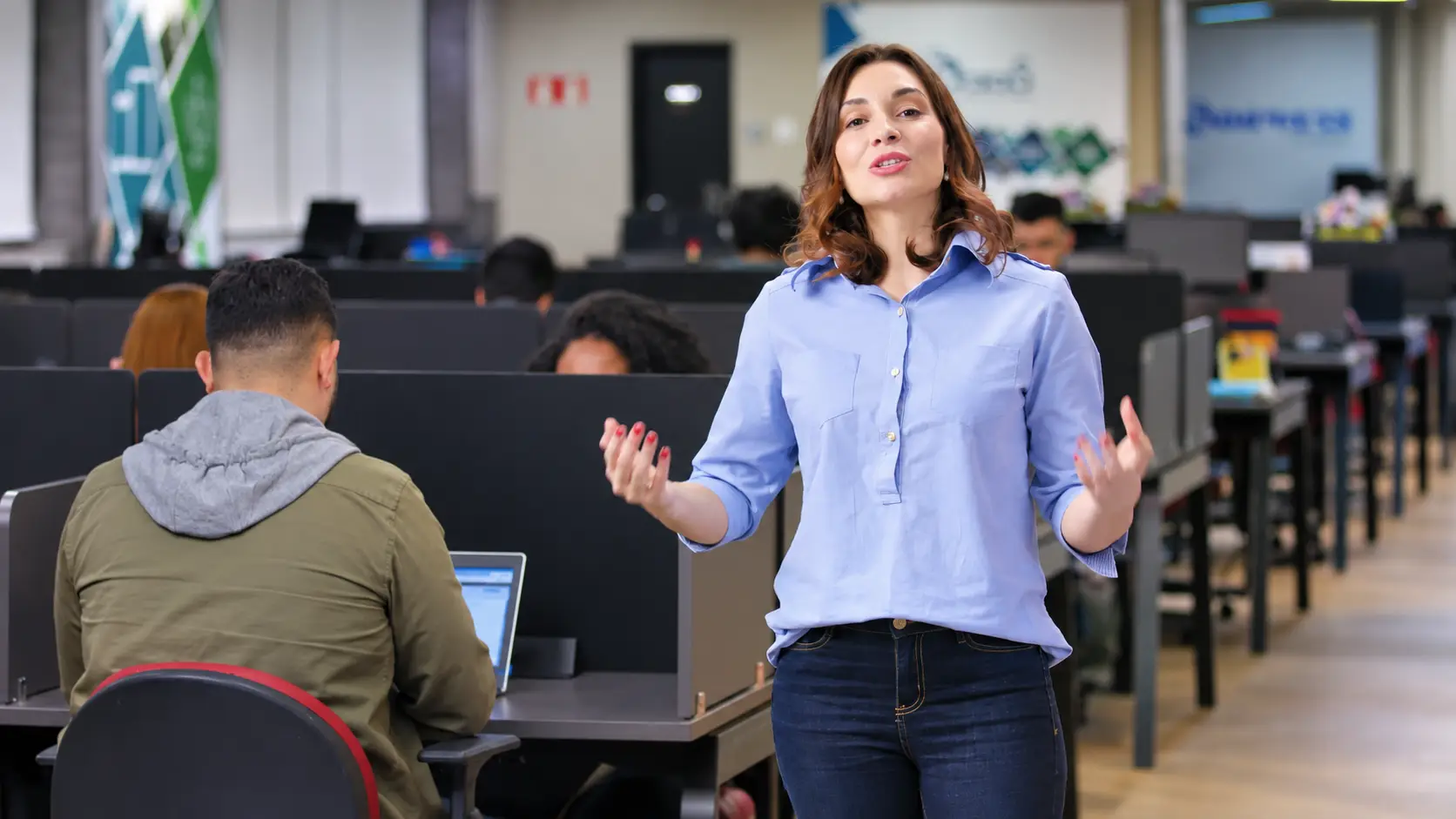
Presenter speaking in an open-plan office as people work at computers, from a branded content video for HP and Simpress