Wizard by Pearson: English on Location
Around 200 filmed English-learning videos for the W-series, animated series for children, productions for teenagers and presenter-led lessons: how Olive Tree Films brings a language to life for Wizard by Pearson.
Part of a bigger story
Wizard is one of Pearson’s brands. Our global animation work for Pearson, with more than 900 lessons, has its own case.
Animation at scale.
A network built on materials
Wizard started with a single school in Campinas and grew into a network of more than 1,100 schools in Brazil, with units in four other countries and courses in eight languages, according to Portal do Franchising.
The context: English across a whole network
Wizard is part of Pearson, which brought the brand into its portfolio when it acquired Grupo Multi, the group that also owned Yázigi and Skill. Pearson later sold Yázigi to MoveEdu and kept operating in Brazilian language teaching through Wizard, described by InvestNews as the largest network in its sector by number of units, competing with brands such as CNA, Wise Up and Fisk.
On its brand page, Wizard presents its learning around teaching materials, technology and the four communication skills: speaking, listening, reading and writing. That is where our work fits. The videos we produce are incorporated into Wizard’s applications and learning materials as complementary content, so each one has to serve a specific lesson, level and age group, and sit naturally next to the book and the teacher.
The audience is wide. The same network teaches young children, teenagers and adults, at different levels, with different expectations of what a video should look like. A treatment that works for a children’s animation would not suit a teenage cast, and a text-led animated video asks for a different balance from a conversation filmed in a restaurant or a hotel.
A network of that size also has an internal audience. Franchise units need to know what is coming before their students do, which is why part of our work was made for the network itself: presentation videos that let each unit preview the resources on their way to the classroom.

The challenge: teach a language, not just film one
A language video has two jobs at once. It has to be good filmmaking, and it has to be good teaching material: the English has to be accurate and natural, the situation recognizable, the performance clear enough for a learner to follow. Casting carried much of that weight. Depending on the project, the brief called for American or British native speakers, or performers with advanced English, who could also act and fit the character.
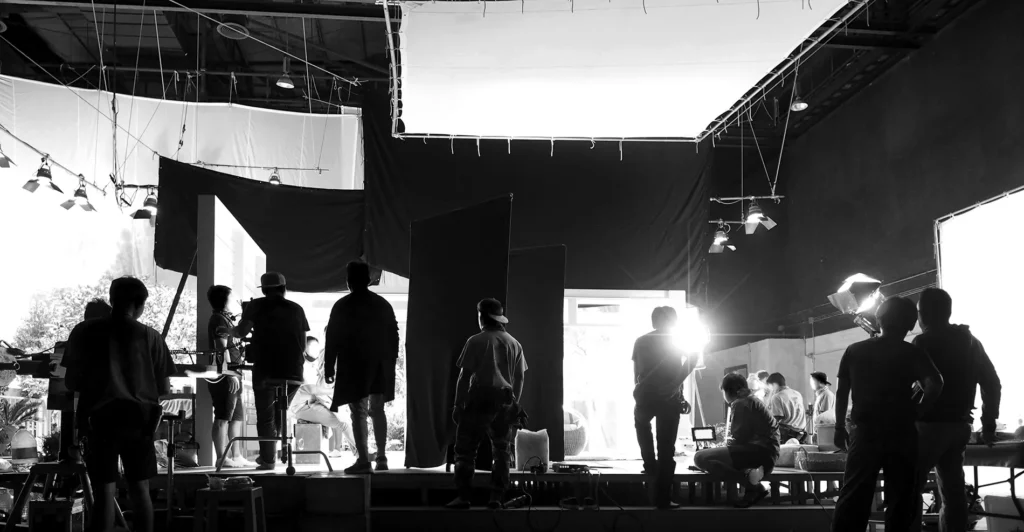
Scale and variety multiplied the difficulty. The W-series alone meant around 200 filmed videos across studios and real locations such as homes, hotels and restaurants, each with its own wardrobe, scenery and characterization. Other projects asked for illustrated worlds for young children, a contemporary look for teenagers and presenter-led lessons tied to the pages of a book. Every production depended on performers, locations, sets and schedules, under tight timelines and client reviews.
Native English on camera
Around 200 filmed videos
Kids, teens and adults
Studios, homes, hotels, restaurants
The insight: language lives in places
People learn a language to use it somewhere: at home, at a hotel desk, at a restaurant table. So the W-series could not live only in a studio. Taking the scripted situations to recognizable settings gives learners context they can read before they understand every word, and makes each conversation feel like something they might actually need.
The same idea guided casting. A native speaker who cannot act makes the language feel stiff; a good actor with weak English teaches the wrong thing. We looked for both, and for diversity in appearance and cultural background. When a character’s religious or cultural details shaped the scene, the team researched them so the portrayal would fit the context with respect.
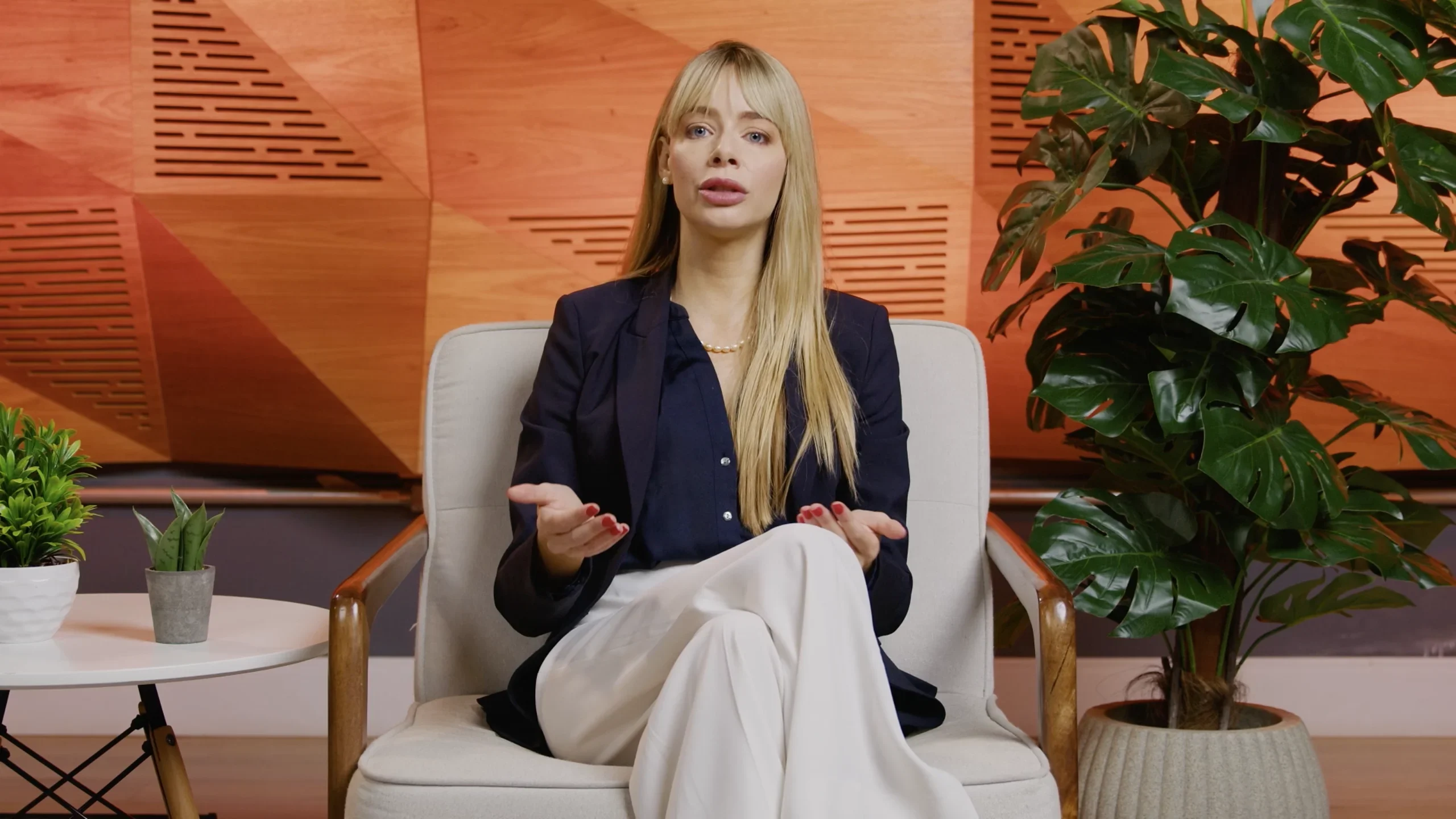
A quick selection of scenes from W10, a project of around 60 video lessons and one of five in the W-series, which together add up to around 200 filmed English-learning videos. Native-speaking performers, real locations and a direction that keeps the language at the center of each scene. Each location was prepared with its own wardrobe, scenery and characterization, and each performance had to work twice: as acting and as a model of natural English that learners can imitate.
The trailer is public. The full videos are available on request.
The scope: what we made in Brazil
The volumes and responsibilities recorded in our production account for Wizard and other Pearson projects in Brazil. Each figure is counted on its own.
01.
Objective and audience
Complementary video content for Wizard’s applications and learning materials, for children, teenagers and adults at different course levels.
02.
W-series
Around 200 filmed videos across W2, W4, W6, W8 and W10, in studios and on location in homes, hotels and restaurants. W10 alone has around 60 video lessons.
03.
Teens
Teens 2, Teens 6 and Teens 8: casting, studio production and location filming, with 3D environments and visual compositing in some videos.
04.
Kids
Little Kids, Kids 2 and Kids 4: 2D animation with character and environment illustration, some in fully illustrated settings, others combining photography with illustrated characters.
05.
Freemium and Hashtag
More than 50 minimalist 2D animated videos for Freemium, led by on-screen phrases and typography, and Hashtag, filmed in studio with an all-teenage cast.
06.
Presenter-led lessons and franchises
More than 30 presenter-led videos on chroma key, with motion graphics bringing in book pages, plus presentation videos for Wizard franchises.
07.
Durations and timeline
Lorem ipsum dolor sit amet, consectetur adipiscing elit, sed do eiusmod tempor incididunt ut labore et dolore magna aliqua.
One partner, many formats
Pearson supplies the scripts. We turn them into finished video, and in Brazil the format changes with every audience. For the W-series, built around everyday situations, that meant live action on location. For teenagers, studio and location shoots, a more colorful and dynamic look and, in some projects, 3D environments composited around the cast. For young children, illustrated worlds with characters, sound and finishing designed for their age.
Some projects asked for restraint. Freemium let on-screen phrases and typography carry the lesson, with illustration in a supporting role, so the challenge was rhythm and clarity without crowding the screen. Presenter-led lessons used chroma key and motion graphics to bring book pages onto the screen, so learners could see which part of the material was being discussed. And for the franchise network, we created presentation videos that combined screen recordings, excerpts and demos, so units could preview the resources coming to their students.

W-series on location

Teens productions

Kids animation

Freemium motion graphics

Presenter-led lessons

Franchise presentation videos

W-series on location

Teens productions

Kids animation

Freemium motion graphics

Presenter-led lessons

Franchise presentation videos
Three audiences
One network, three ways to look
The same partnership produced very different videos, because the people watching them are very different. Age changes the visual language, the pace and the kind of performance a lesson needs. This is how the approach changed with the audience.
Children
Illustrated worlds
2D animation with illustrated characters, in fully drawn settings or combined with photography.
Teenagers
Color and energy
Studio and location shoots, an all-teenage cast in Hashtag and, in some projects, 3D environments.
Language learners
Real situations
The W-series on location in homes, hotels and restaurants, with native or advanced English speakers.
The experience: solving it together
Long partnerships are tested when something does not go as planned. In one live-action production for Pearson in Brazil, a performer’s interpretation did not reach the expected result, and the footage had already been shot. A full reshoot would have been hard to fit into the schedule. We solved it with dubbing, replacing the original voice with a performance that met the project’s needs while preserving the filmed material. The delivery kept its quality, and our team’s account records that the client was very satisfied.
Episodes like this are where trust shows. Over the years, the relationship with Pearson’s brands gave both sides the confidence to discuss risks, suggest alternatives and agree on corrections, and our records note recurring praise for our team’s quality, organization and deadlines.
Who did what
The process: from script to screen
Pearson supplied the scripts and reviewed the work. We handled the audiovisual execution, from script breakdown and casting to final delivery.
Pearson writes.
We produce.
Casting tested for
English and acting
-
Script breakdown
Scenes, locations, characters and a production plan for each script.
-
Casting
Native or advanced English speakers, tested for fluency and interpretation.
-
Pre-production
Locations, sets, wardrobe and characterization researched for each setting.
-
Production
Studio and location shoots, or illustration and 2D animation for the kids series.
-
Post and delivery
Editing, compositing, motion graphics, sound, finishing and coordinated reviews.
Fluent and
believable.
Pearson’s editorial teams own the curriculum, the scripts and the methodology, and we do not claim them. When native-speaking performers were not available for a teen production, candidates were tested for both English fluency and interpretation, and each role went to the performer who could meet its full needs.
The results
Volume, delivered
to the same standard.
~200
filmed videos across the W-series, from W2 to W10.
50+
minimalist 2D animated videos for Freemium.
Source: Olive Tree Films project records. Volumes keep their original qualifiers and are not added into a single total.
Our team’s account records that every project described was completed successfully, with positive feedback on quality, organization and deadlines, and strong acceptance of the final result of Hashtag. These are delivery outcomes reported by our team. We do not claim learning gains, completion rates or engagement, which would need their own measurement. What the numbers do show is range: the same team moved between live action, animation and presenter-led formats for the same client, keeping the quality consistent across them.
Beyond the numbers
Trust, range, continuity
Volumes show the scale. These outcomes show what kept the partnership going. None of them is a metric, and all of them are reasons a client keeps working with the same team.
Trust
Problems solved together
From a dubbing solution to corrected artwork, issues were raised early and fixed together.
Range
Every format, one partner
Live action, 2D animation, motion graphics, compositing and presenter-led video for the same client.
Continuity
Years of work
The relationship with Pearson’s brands continues across Brazilian and global projects. See the Pearson case.
Related work and formats
Where this case connects to the rest of what we do.
Questions about this case
Short answers for schools and publishers planning English learning videos.
How many English learning videos has Olive Tree Films produced for Wizard?
Around 200 filmed videos across the W-series, from W2 to W10, with W10 alone accounting for around 60 video lessons. Our records also show more than 50 animated videos for Freemium and more than 30 presenter-led videos among Pearson’s projects in Brazil. Each figure is counted on its own.
Who acts in the Wizard videos?
American or British native speakers, or performers with advanced English, depending on the project. Every candidate needs both language and acting ability, and we look for diversity in appearance and cultural background. When native speakers were not available, candidates were tested for fluency and interpretation.
Where were the W-series videos filmed?
In studios and on location in homes, hotels and restaurants, so each conversation happens in a setting learners recognize. Each location required its own wardrobe, scenery, characterization and direction to support the scripted situation.
Why film English lessons on location instead of only in a studio?
Because a language is used in places. Homes, hotels and restaurants give learners context they can read before they understand every word, and make each conversation feel like a situation they may face. The W-series combined studio scenes with these real locations, each prepared with its own wardrobe, scenery and characterization.
How do you choose between animation and live action for an English course?
By audience and by what the lesson needs to show. Young children connect with illustrated worlds and characters; teenagers respond to a more colorful, dynamic look; everyday conversations work best with real people in real settings; and text-led lessons can let typography and motion graphics carry the content.
How are the videos used in Wizard courses?
As complementary content inside Wizard’s applications and learning materials, next to the books and the teacher. We also produced presentation videos for Wizard franchises, so units could preview the resources coming to their students.
What happens when a performance does not work after the shoot?
We look for the solution that protects the material. In one live-action production for Pearson in Brazil, a performer’s interpretation did not reach the expected result after filming, and a reshoot was hard to fit into the schedule. Dubbing replaced the original voice and preserved the footage, and the client was very satisfied.
Does Olive Tree Films write the lessons?
No. Pearson supplies the scripts, and its editorial teams own the curriculum and the methodology. Our part is the audiovisual execution: casting, locations, sets, filming, illustration, animation, editing, sound and finishing.
Start a conversation
Teaching a language?
Let’s give it a voice.