Way-262: No Barrier. A Clear Way Forward.
Five short animated explainers that taught BR-262 drivers how barrier-free tolling works and how to pay, written and produced by Olive Tree Films with Gaudí Creative Thinking, the agency behind the wider campaign.
Made with an agency
Produced with Gaudí Creative Thinking, the agency behind the wider campaign for Way-262.
Agency partners welcome.
The context: a toll without a booth
Way-262 operates a stretch of the BR-262 in Minas Gerais, connecting the Betim and Uberaba regions, under a federal concession described by the regulator, ANTT. When the operator introduced free-flow charging at its Nova Serrana and Ibiá toll points, a familiar ritual disappeared. For generations, paying a toll meant approaching a booth, stopping at a barrier, paying and moving on. Now the vehicle keeps moving, cameras and sensors register the passage, and payment happens automatically through an active tag or requires action through the operator’s channels.
The operator explained the change in its own publications: identification by tag or license plate, and a payment window of up to 30 days for drivers without a tag, as described in its pre-launch magazine and its launch issue. The barrier was gone. The need for understanding became more visible, and it had to reach drivers before the first payment became their responsibility. For drivers without a tag, the change also meant a new habit: checking and paying for their passages through the operator’s app or website.

Nova Serrana and Ibiá

No booth, no barrier

Tag or license plate

Up to 30 days to pay

App and website

Local and long-haul drivers
Nova Serrana and Ibiá

No booth, no barrier

Tag or license plate

Up to 30 days to pay

App and website

Local and long-haul drivers
The challenge: explain what people can no longer see
A toll barrier is its own instruction. It shows the driver where the transaction happens and when payment is expected. With free flow, that moment becomes invisible: the passage is recorded without a stop, and the payment route depends on whether the driver has an active tag. Someone without one needs to know that the passage was registered, where to find the charge and how to settle it.
Our team’s account names three communication tasks. Make the change recognizable, so drivers know electronic charging is arriving at those locations. Teach the next action: the system, the app, checking charges and paying without an active tag. And communicate responsibility calmly, so the payment obligation is clear without the explanation feeling like a threat.
The audience made it harder. Local travelers, truck drivers and people passing through the region would meet these videos mostly on a phone, often one at a time, sometimes forwarded on WhatsApp without the rest of the campaign around them. Each video had to work alone and as part of a sequence, with instructions precise enough for an operator’s public communication. And all of it had to be ready before the first charge, on a schedule the launch date made non-negotiable.
The driver’s order
A single film with every rule, benefit and payment scenario would ask too much of a driver. So the series answers one question at a time, in the order a driver would ask it, and each piece can travel alone on a phone without losing its meaning.
The series: five questions, in order
Each video has one job. Together they follow a driver from understanding the system to paying. A driver who meets one video on a phone can stop there with a complete answer, or move on to the next step. The English titles below describe the topics; the videos are in Portuguese.
01.
How electronic tolling works
What happens when I pass through? The basic system: the gantry, identification by tag or plate and the recorded passage.
02.
The benefits of electronic tolling
What changes about the journey? The benefits presented in the campaign.
03.
How to use the app
Where do I begin? The first steps in the electronic tolling app.
04.
How to check charges
How do I find what I owe? Consulting charges in the app.
05.
How to pay without an active tag
What do I do if payment is not automatic? The payment route for drivers without a tag.
The script: a technical brief, made human
The starting materials were technical: operating rules, identification technology, payment channels, deadlines and the consequences of not paying. Our job was to decide how that information should unfold for someone who had never seen the system. Each script connects the explanation to the driver’s immediate questions: what happened, where the charge is and how to resolve it.
Three decisions guided the writing. One main question per video, which limits competing instructions in a short running time and gives the animation a clear purpose. A sequence that follows the user’s needs, from the concept to the practical steps. And a constructive tone around payment, treating consequences as information inside an explanation of how to stay up to date. The structure also made the series flexible: someone stuck in the app could be sent straight to the right video.
One question per video
The driver’s order
Calm about payment
Made for the phone
The art: make the invisible process visible
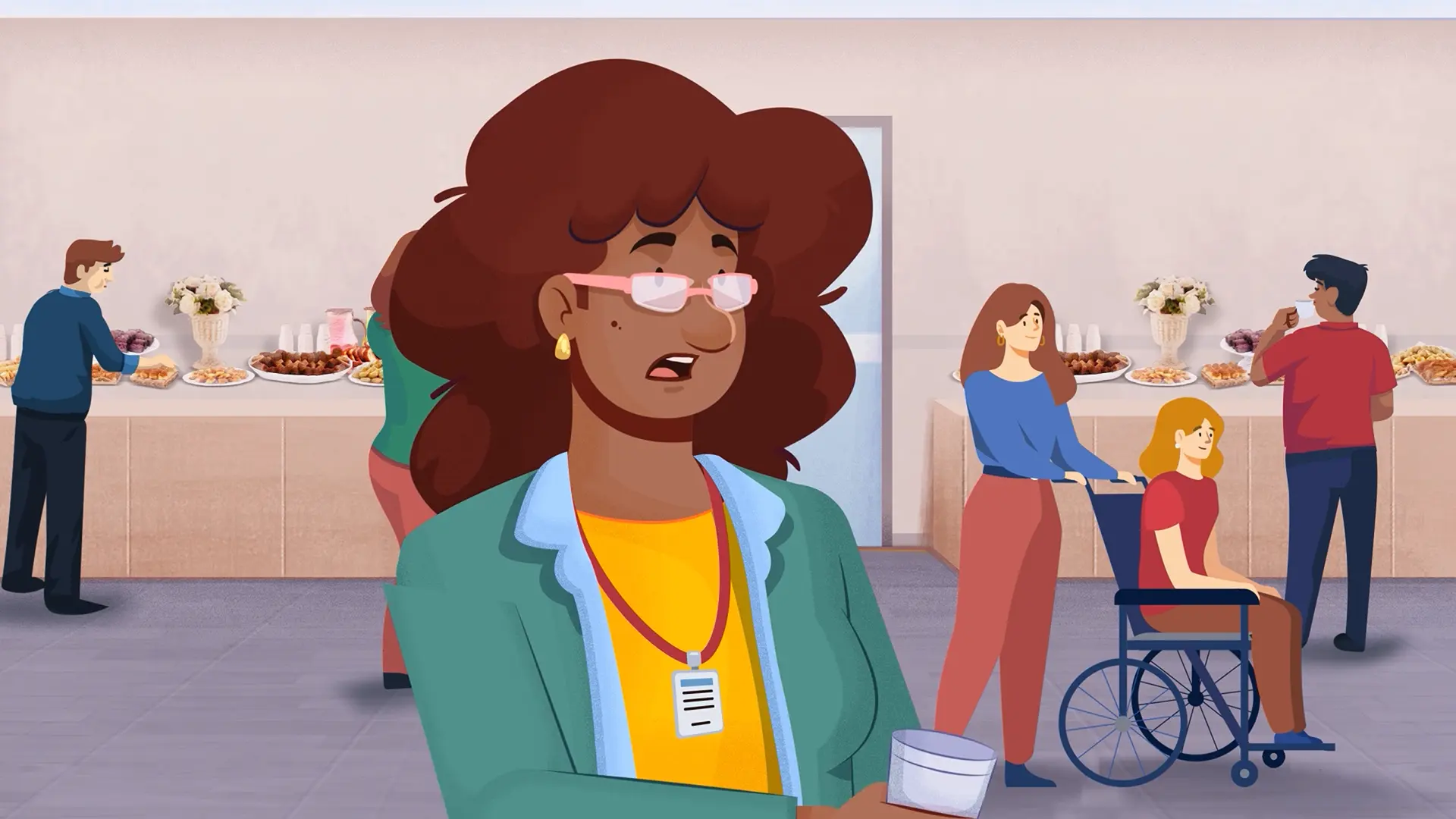
Some of the most important moments in electronic tolling are hard to film. A camera reading a plate or a tag being detected happens in an instant and explains nothing to a viewer. So the series used illustration and graphics to show the process: vector illustration for the gantry and the identification technology, line icons to simplify each payment step, graphics over real images of roads and people using their phones, and Way’s blue palette to keep the brand present throughout.
The sound followed the same logic. We proposed professional voice talent from Minas Gerais, so the explanation would sound like a familiar conversation for the people who use the road, while keeping the clarity practical instructions need. Subtitles supported viewing without sound, and music and sound effects completed the treatment. Animation also solved a timing problem: it could show the system before the charging operation was in use.
Five short animated explainers, about one to one and a half minutes each, written and produced by Olive Tree Films for Way-262’s free-flow launch, in horizontal versions for the website and vertical versions for social media. Each video ends where the next question begins, so a driver can follow the series or jump straight to the answer they need.
The trailer is public. The full videos are available on request.
The scope: what we delivered
What the project included, as recorded in our team’s account.
01.
Objective and audience
Help local drivers, truck drivers and travelers on the BR-262 understand barrier-free tolling and know how to pay.
02.
Videos
Five educational videos, one question each, from how the system works to paying without an active tag.
03.
Durations
Approximately 60 to 90 seconds per video.
04.
Versions and channels
Horizontal versions for the website and vertical versions for social media, planned for mobile viewing and WhatsApp sharing.
05.
Language and voice
Portuguese, with professional voice talent from Minas Gerais, subtitles, music and sound effects.
06.
Timeline
About three months of production, with the first delivery roughly a month before charging began and the series completed within the required schedule.
07.
Our services
Scriptwriting, art direction, 2D animation, motion graphics, voice-over, subtitles, music and sound, and format adaptation.
The experience: a partnership that started with people
The relationship began before the brief. According to our team’s account, Caroline Mendonça, our co-founder and director, met Aline Sanchez, partner and director at Gaudí, through Mestre GP, a community for agency project managers. When Gaudí needed a video series for the Way-262 campaign, it invited us to produce it.
The work itself was close. Gaudí supplied the materials and followed every stage, Way-262 took an active part in approvals, and prompt approvals helped the series reach completion within the required schedule, with the first video delivered before charging began. For an agency, that is what a production partner should feel like: an extension of its own team, working to its deadline. Because the same team wrote the scripts, directed the art and finished every version, changes requested in approvals could move through the whole series consistently.
Who did what
The process: three partners, one series
Gaudí led the campaign and supplied the materials. Way-262 provided the technical context and approved the work. We wrote the scripts and produced every version.
Scripts by
Olive Tree Films
Campaign by
Gaudí Creative Thinking
-
Brief and inputs
Gaudí’s brief and Way-262’s technical materials on the system and payment.
-
Scripts
One question per video, in the driver’s order, written by our team.
-
Art direction
Vector illustration, line icons, graphics over real images and Way’s blue palette.
-
Voice and sound
Voice talent from Minas Gerais, subtitles, music and sound effects.
-
Animation and versions
2D animation and motion graphics, finished in horizontal and vertical versions.
One question
at a time.
The campaign concept, “Rodovia Inteligente para você seguir em frente”, roughly “An intelligent highway to keep you moving forward”, and the physical and digital campaign around the videos belong to Gaudí, as shown in its campaign portfolio. Our part is the five-video series, from script to finished versions, by a full-service studio with experience in filming and animation, as described on our About page.
The results
A campaign that reached
the road.
2M+
visual impacts reported for the wider campaign.
60,000
interactions reported across the campaign.
Source: campaign results reported by Gaudí Creative Thinking in its portfolio.
Gaudí also reports more than 1,400 qualified organic interactions with educational videos and 54 tag activations. These are agency-reported figures for the whole campaign, which combined physical and digital touchpoints, and they do not isolate the performance of our five videos. The result directly attributable to our assignment is the series itself: five explainers, in two versions each, completed within the required schedule.
After 30 days
How drivers actually paid
A published report carrying Way-262’s 30-day balance, from Portal Araxá, describes the launch environment. The figures do not show that viewers of the videos were the ones who paid, or that the videos caused the payment rate; signage, tags, customer service and other campaign actions were part of the same picture. We include these numbers because they describe the reality the videos were made for, not because they measure the videos.
Paid
85%
reported as paid in the operator’s 30-day balance.
Among payers
70% and 30%
paid with a tag (70%) or through the website or app (30%).
Still on time
15%
were still within the payment deadline when the balance was published.
Related work and formats
Where this case connects to the rest of what we do.
Questions about this case
Short answers for agencies and operators planning an explainer video series.
What is an explainer video series?
A set of short videos that each answer one question, designed to be watched in sequence or on their own. For Way-262, five animated explainers took drivers from how barrier-free tolling works to paying without an active tag, each in about 60 to 90 seconds.
Why split the Way-262 explanation into five videos?
Because one film with every rule, benefit and payment scenario would ask too much of a driver watching on a phone. One question per video keeps each explanation focused, helps people find the answer they need and lets each piece circulate on its own, including on WhatsApp.
Who wrote the Way-262 videos?
Olive Tree Films wrote the scripts from Gaudí’s brief and Way-262’s technical materials, then produced the series through finished versions. Gaudí Creative Thinking led the wider campaign, and Way-262 provided the technical context and approved the work.
Why use animation instead of filming the toll gantry?
Because the key moments are invisible on camera: a plate being read or a tag being detected happens in an instant. Illustration and graphics show the process step by step, and animation could explain the system before the charging operation was in use.
Why a voice from Minas Gerais?
To make the explanation sound like a familiar conversation for the people who use the BR-262, while keeping the clarity practical instructions need. It was a deliberate production choice; we did not measure its effect on trust or payment.
Did the videos increase toll payments?
We do not claim that. Way-262’s published 30-day balance reported 85% paid, and Gaudí reported strong campaign-wide figures, but neither isolates the effect of our videos. Signage, tags, customer service and other campaign actions were part of the same launch.
Start a conversation
Changing how people do something?
Let’s explain it clearly.